

When I tell someone I am an I-O psychologist, they usually say, “What is that?” or “Are you reading my mind right now?” Okay, we need to improve our brand name, but that is another blog for another day.
I-O psychologists come in many forms, but they all engage in research and organizational practices that ultimately improve employee well-being and organizational effectiveness. To do that, they identify, measure, and evaluate the psychological characteristics and behaviors of people in the workplace.
For example, the key aspects of understanding job performance are technical (e.g., knowledge and skills), interpersonal (e.g., teamwork and communication), and intrapersonal (e.g., time management and emotional control). Armed with this understanding, I-O psychologists can work with organizations to decide which activities to invest in, such as recruiting, hiring (my research area), training, teamwork, and job redesign.
What is interesting — and the main point of this blog post — is how I-O psychologists can contribute in vital ways in understanding, predicting, and creating pathways between education and the workforce. I-O psychologists have made extensive use of the O*NET Content Model (Department of Labor) as a way to compare job characteristics and job requirements across occupational categories that cover most of the US labor market.
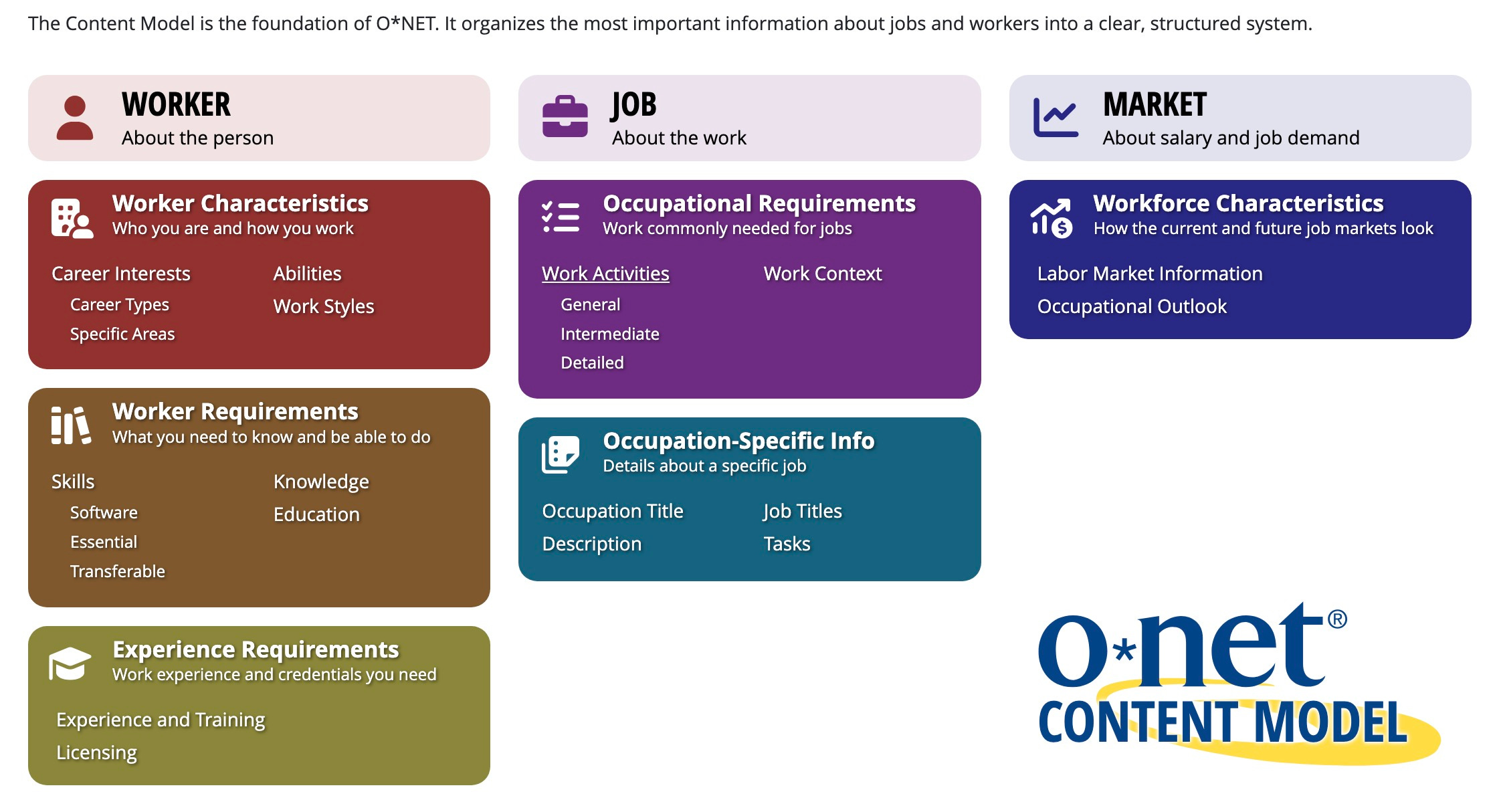
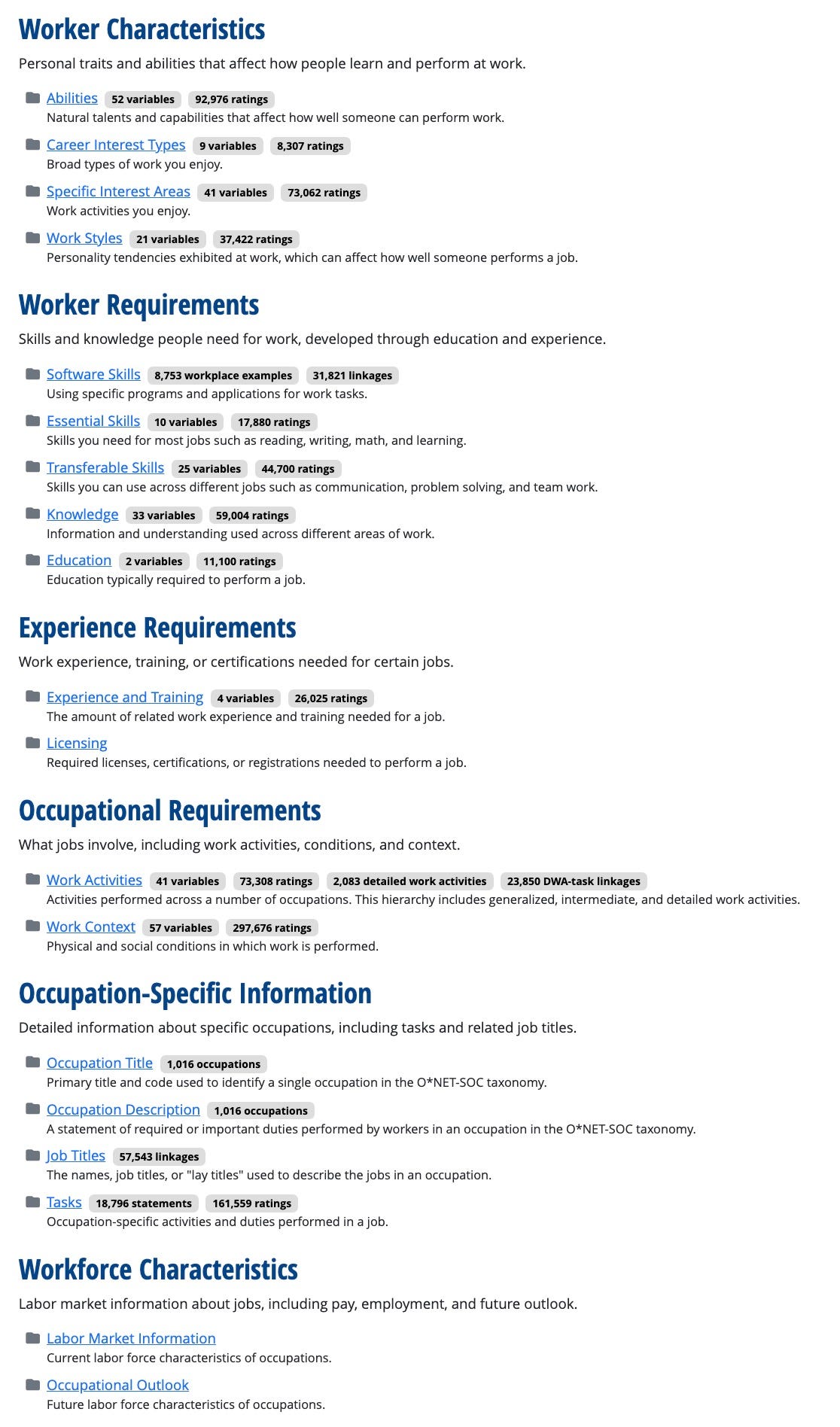
The O*NET Content Model organizes hundreds of variables that describe 923 occupational titles covering most of the US labor market. Notice that the structure of the model aligns well with the three aspects of performance above. Worker Characteristics — work styles, values, and interpersonal demands — line up with the interpersonal and intrapersonal skills that increasingly define good work. Worker Requirements line up with necessary technical skills for an occupation. Experience Requirements reflect the educational investments (training and certification) needed to enter into a given occupation. Specific variables within the Content Model are organized below.
In parallel, educational researchers have been deeply involved in developing a wide variety of skill taxonomies highly relevant to current and future workforce needs (here is a comprehensive overview by ETS, 2023). Harvard’s Explore SEL project even crosswalks these taxonomies, so you can view how frameworks are related (using different words for similar ideas) and unique (tapping new-yet-important skills).
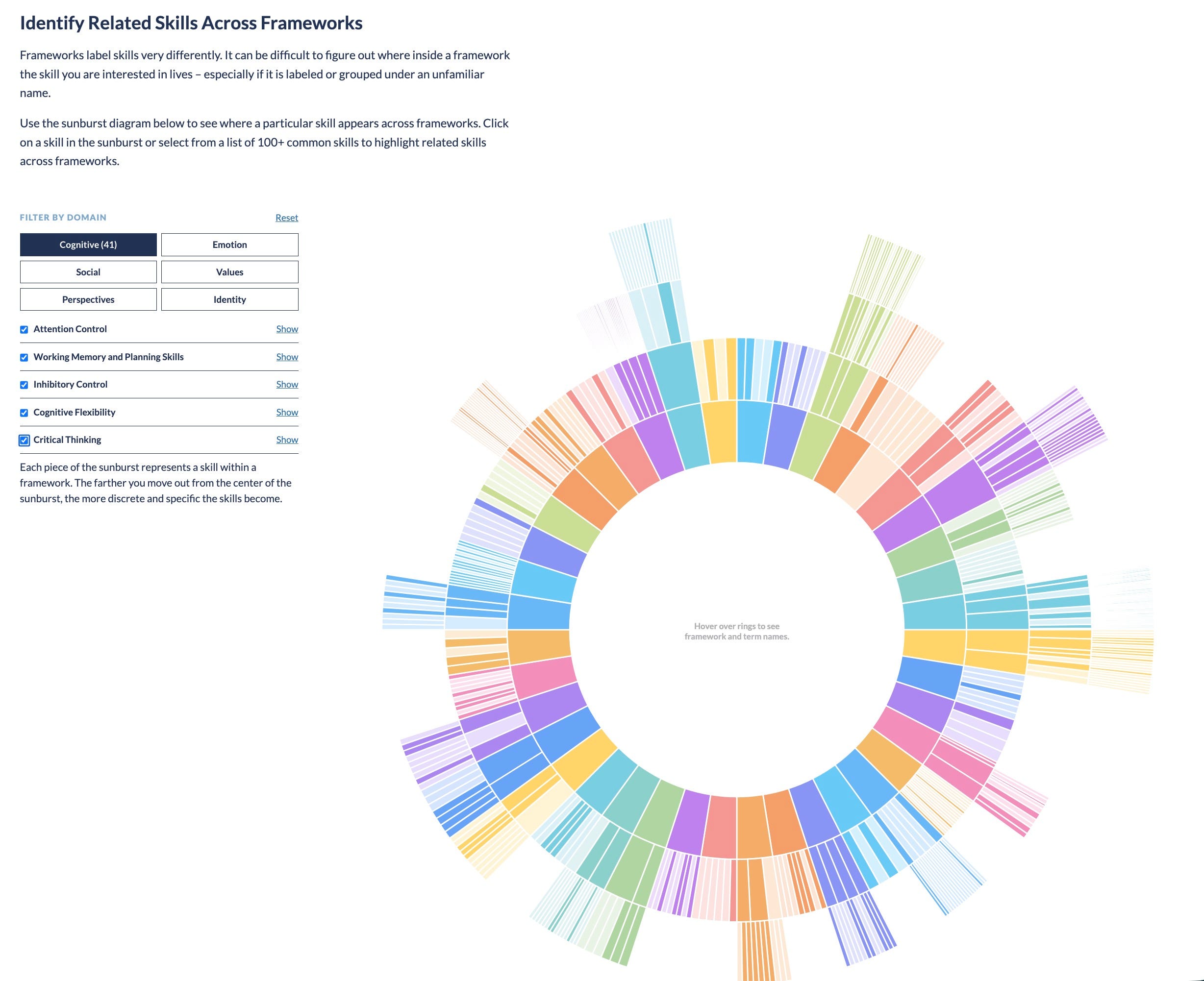
If I-O psychologists could work more closely and more often with educational researchers to align educational taxonomies with O*NET’s descriptors, both fields would benefit: educators would gain clearer targets for what to teach, and employers would gain a workforce whose preparation better maps onto the skills that jobs and organizations actually demand.
In thinking about relevant data and research behind building strong education-to-work pathways, the golden spike at Promontory Point comes to mind, where educational expertise can meet I-O psychology expertise, and a shared, evidence-based vocabulary will connect what students learn to what work requires. This is of course not easy because the number and nature of jobs change as the economy and skills base evolve (hello, AI). But if credentialing (diplomas, certifications, technical training) are better aligned with job descriptions, we will have done better than we have in the past. Educational policymakers and, ultimately, each school and classroom will be put on a stronger track for building the competencies the labor market rewards, doing so with some agility as the supply and demand for skill sets change over time. Helping people understand and pursue greater possibilities in work and in life pays off at multiple levels: individuals, families, and communities, which in turn build a vibrant society and a competitive national economy.